The Ngāti Kahungunu Region
The Harrier Hawk’s view.
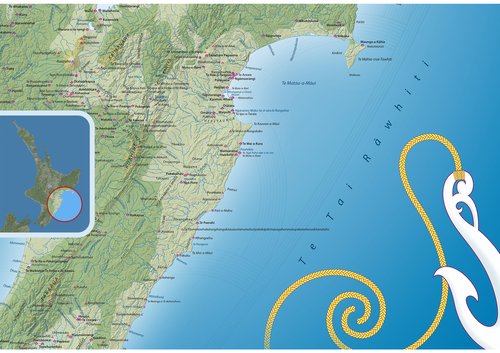
Hero image: Area of Kahungunu from Te Ika-a-Māui map [screenshot]. Retrieved from the Toitū Te Whenua Land Information New Zealand website, in 2025.
Te Wairoa, Hasting, Te Wairarapa.
Ngāti Kahungunu has unique features such as ‘kai’ in ‘kai te pai’, ‘taina’ the word for younger sibling, and ‘māhau’ to show who will carry out an action.
These expressions are characteristic of Ngāti Kahungunu speakers and their neighbouring iwi.
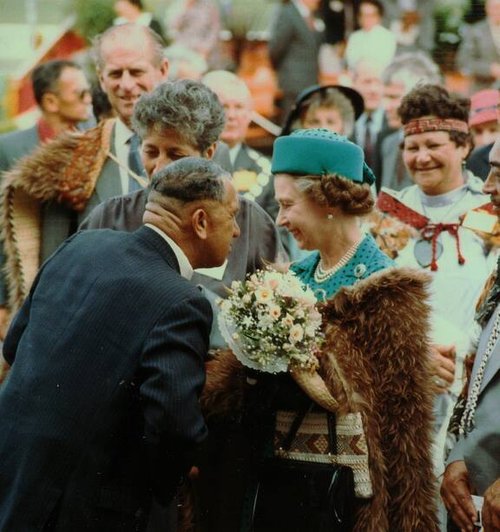
The late Taanga Tomoana – memorable hongi with the Queen during a visit to Hawke's Bay in 1986. Photo / NZME.
Iwi: Ngāti Kahungunu
Taanga was a very articulate speaker of Māori and English in his time. He was a renowned orator and knowledge holder for his people.
His father, Paraire Tomoana, was a famous composer of waiata and had a remarkable life full of amazing achievements. Taanga inherited many of his qualities.
Taanga shares insights into marae protocol in the Ngāti Kahungunu region of Heretaunga, focusing on the welcoming of guests and funeral rites.
He discusses the forms of mihi and how a young person was called on to speak. Taanga also notes that an elder would always close the proceedings as the final speaker.
Taanga discusses the role of women who have speaking rights on marae in Ngāti Kahungunu and the reasons behind this. He recounts the example of Hinekatorangi, one of these speakers, who was called upon to speak on the marae following the passing of Tā Timi Kara’s wife in Tūranga.
● te iwi whakaeke / the group coming on
● te whare pōuri / the house of mourning
● e whai mai haere ana / following
● te wharau / the shelter
● māhau e wāhi te kōrero / you can begin the speeches
● ā, pau noa te tangata whenua / when the locals are finished
● he aha hoki / what the heck
● ehara i te mea he aha / for what purpose, because
● te huahua noa atu / so many