The West Coast of the North Island
Orators of the western North Island
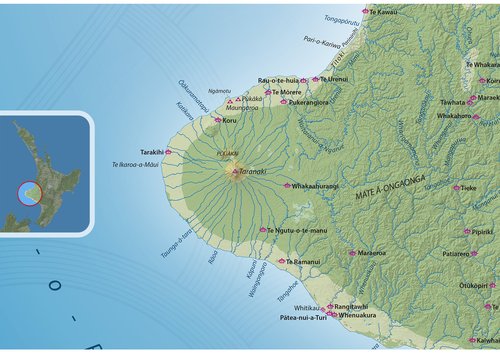
Hero image: West Coast of the North Island Te Ika-a-Māui map [screenshot]. Retrieved from the Toitū Te Whenua Land Information New Zealand website, in 2025.
Look and listen to revered native speakers of te reo Māori from Taranaki to Whanganui.
One well known characteristic in the region is the way they pronounce ‘wh’ and ‘h’. In this selection, differences can be observed in the way this is practiced. Some speakers pronounce the Taranaki ‘wh’ all the time, while others pronounce it this way for some but not all kupu.
There are also some unique vocabulary items such as ‘whaene’ and ‘pahake.’
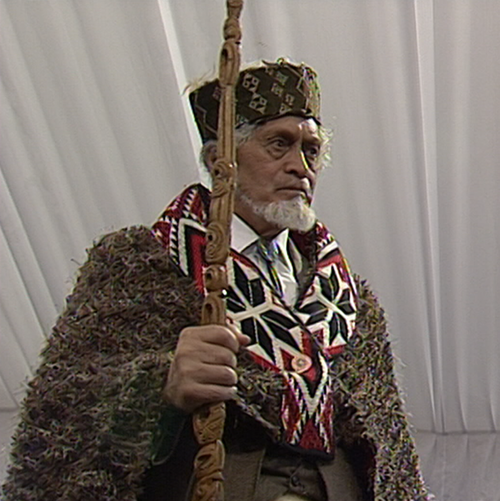
Te Huirangi at the Launch of Whakaata Māori in 2004. Courtesy of Whakaata Māori [screenshot].
Iwi: Ngāti Ruanui, Ngāpuhi
Hapū: Hāmua, Hāpōtiki
Te Huirangi (Huirangi) was a tireless advocate of te reo Māori in his time, renowned throughout Aotearoa and the world for championing numerous initiatives to ensure the language’s revitalisation and survival.
In 1985, te reo Māori wasn’t formally recognised as an official language of Aotearoa and Huirangi discusses why making it official is important. It was finally made official by the Māori Language Act 1987.
Listen below to Huirangi talk about the efforts of Ngā Kaiwhakapūmau i te Reo during his time.
This taonga discusses the establishment of the first Māori radio station in Aotearoa, Te Reo o Pōneke – a powerful platform that gave voice back to te reo Māori. These early broadcasts laid the foundations for a movement that would reconnect communities, revitalise the language, and carry the sounds of te reo across the motu and into our homes.
For generations, te reo Māori held little to no status in New Zealand law – its speakers often silenced, its use discouraged. Yet Māori leaders stood firm in their belief that language is a taonga, a living treasure.
Listen here as Huirangi speaks to this.
Once, it was said there was no value in speaking Māori — that it offered no place in the modern world. But voices like Huirangi challenged that view, affirming that te reo Māori is not just beneficial, but essential to Māori identity, wellbeing, and the life of the nation.
Listen to the entire taonga here
Collection Reference: 49900
Year: 1985
Credit: RNZ; Waikerepuru, Te Huirangi
● the pronunciation of ‘h’ by the local people
● use of the word ‘na’ to show relevance between sentences
● the use of the glottal stop – a break between the syllables where your throat closes – in words like: pēwhea, whakatū, whakaaro
● ia wā, ia wā o te rā / all day every day
● ia rā, ia rā, ia rā / each and every day
● kua kore e āwhinatia / not supported by
● kia taurite te mana / for the recognition to be equal
● kāore hoki he painga / there is no value
● mā te hoki rawa mai o tō tātou reo / with the return of our language
● i ora ai rātou mō ngā mano tau / they survived for thousands of years
● taraipiunara / tribunal
● Pōneke / Port Nicholson (Wellington)
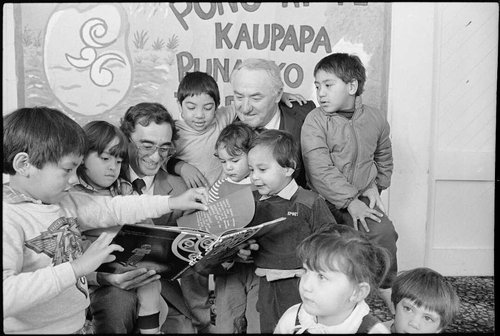
Two members of Waitangi Tribunal visit kohanga reo at Waiwhetu - Photograph taken by John Nicholson. Dominion Post (Newspaper): Ref: EP/1985/2942/15-F. Alexander Turnbull Library, Wellington, New Zealand. /records/23028978
Iwi: Te Āti Haunui-a-Pāpārangi, Ngāti Tūwharetoa, Te Arawa, Ngāti Maniapoto, Ngāti Maru Kopiri, Te Āti Awa, Ngāti Ruanui, Ngā Rauru, Ngāti Apa, Rangitāne
A respected expert and leader in both Māori and Pākehā worlds, John Tahuparae was the Māori kaumātua of Parliament during his time. He established the Rangataua o Aotearoa Māori Martial Arts and Cultural Crafts Association (ROA) and dedicated his life to the advancement and wellbeing of Māori.
In 1982 the first kōhanga reo, Pukeatua Kōhanga Reo, was established in Wainuiomata, paving the way for many more kōhanga to be established. Among the voices that marked the historic occasion was John Tahuparae, a gifted and skilful orator. Here, you can hear the depth of his reo as he acknowledges the various iwi and marae throughout Aotearoa.
A skilled kaikōrero knows how to bring people together – to weave together the many strands of people gathered in support of the special occasion. In this recording, John’s words embody the art of oratory.
John leads a traditional chant to complement his speech – a reminder that spoken word and waiata are interwoven, each enhancing the mana of the other.
● The unique pronunciation of wh and h
● The mihimihi traverses the motu, naming marae, maunga and landmarks from all areas
● Listen to how John weaves in whakataukī e.g. the singing kōmako
● The entire mihimihi is presented like tauparapara, and not just spoken
● pūreirei / isolated
● mana motuhake mō te Māoritanga / the uniqueness of Māori culture
● ‘... ka hoki taku aro ka hoki mai ki taku pae maunga’ i te mutunga o tana huri rauna i te motu / ‘... my attention turns back to my own mountains,’ as he concludes his journey around the island
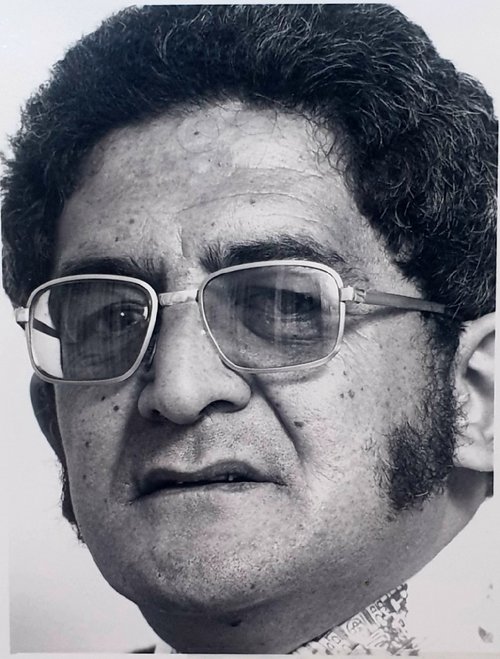
Ruka Broughton. Tapuaka – Heritage & Archive Collection ref: vusc00002.
Iwi: Ngaa Rauru Kiitahi
Ruka was a tohunga, Anglican priest, and university lecturer. He was born in Whanganui and went to primary school at Pākaraka, then Whanganui Technical and Te Aute Colleges.
He married Mere Broughton, to whom he had five children. He later married Dolly Sadie Matewhiu Pene, and they had two children.
Ruka greets the audience listening to the programme, and notes there are too many people to mention. He then turns his attention to those that have passed, and again, he notes that there are many who have passed, a common feature of whaikōrero, of formal speeches.
Ruka explains that if he doesn’t take the initiative to speak Māori in his own home, how can the language survive, if such steps are not taken?
Ruka describes a range of ways that the language continues to be suppressed, and the role that parents can play in revitalising te reo Māori.
The language experts were recognised for their knowledge, however, many also carried a deep-seated fear shaped by their schooling, where they had been punished by teachers for speaking te reo Māori.
● the pronunciation of ‘h’ by the local people
● e ngā whakahuahuatanga maha / the many who are referred to
● ō tātou aituā mahamaha noa iho / the many who have passed on
● ko au, he mea kōrero Māori / I am a Māori speaker
● ki te kore hoki au e kōrero Māori atu / if I don’t speak Māori
● me pēhea hoki e ora ai i roto i tōku whare? / how can the language live in my house?
● kei rātou kē te reo / those that already have the language
● ko rātou kē kei te patu i te reo / they are the ones not honouring the language
● kua hoki anō ō rātou whakaaro … / they are thinking back to …
● pahake / adults / parents
● e patua ana rātou i te kura / they are beaten at school
● kua haere tonu taua weri rā / that fear is still present
● kua mārō hoki tā rātou haere / their path is set
● kātahi anō ka takataka mai i te kōpū / those that are born now
● whaene / mother
● ko te tino tohungatanga o te reo / the exemplary language
Collection Reference: TZP164559. Year: 1995. Credit: TVNZ.
The 1990s were an important period for capturing the Māori language being spoken by kaumātua – the elders of that time have now passed. This episode captures the beauty of the language and their views.
There are two main kaupapa in this programme. First are the perspectives that the kaumātua have on the language of today, the changes it is undergoing and how well they understand it.
The second, being the main kaupapa in the episode, is footage of a tangihanga in south Taranaki which shows the unique tikanga being carried out.
Quotes from two speakers have been included in this exhibition, both younger speakers: Tengaruru Wineera and Ruta Broughton.
From Ngaa Rauru Kiitahi and Ngāti Maika. Ototoka is the river. Pākaraka is the settlement. Te Whānau Pani Tuatoru is the meeting house.
“He uri ahau heke mai ai i ngā kāwai o Taranaki maunga. / I am a descendant from the lines that flow from Taranaki mountain.
Ko Tāngahoe te wai tuku kiri o ngā mātua tūpuna / Tāngahoe is the life-giving river of my ancestors.
Ko Hāmua te pā whakaruru, ko Hāpōtiki te pā tū whakarae / Hāmua is the place of shelter and Hāpōtiki is the bastion on the headland.
Ko Taiporohēnui te papa kāinga / Taiporohēnui is my home.
Ko Tengaruru ahau / I am Tengaruru.
Ko Tāngahoe te awa / Tāngahoe is the river.
Ko Aotea te waka / Aotea is the waka.
Discussion about the absence of Taranaki reo being taught at universities, and how students, exposed mainly to other dialects, end up learning and speaking those instead.
The question is posed, why move away from Taranaki to learn the language?
A key issue is the lack of local employment, which forces people to move away from their home communities in search of economic opportunities.
We get lonely for the old people who have passed on as they brought us up and taught us our language - we think about those times and feel sad for the old people.
● consistent use of the local pronunciation of the ‘h’ in words such as ‘whānau,’ ‘mahi,’ ‘he aha,’ ‘hoki’
● pahake / elder
● morimori / raised / brought up by
● a ia / her