Transgender Identities in the 1970s
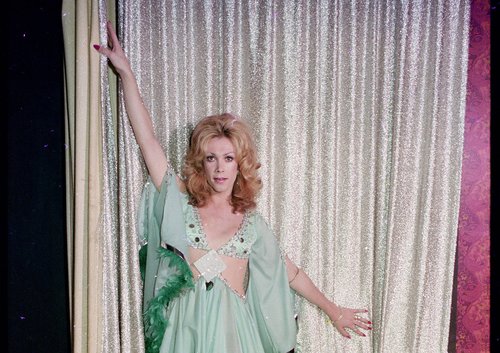
Hero image: Niccole Duval at Mojo's Nitespot, 1975. Rykenberg Photography. Auckland Libraries Heritage Collections 1269-19750215-21.
Note: Given their age, some of these recordings contain outdated language, homophobic attitudes, and/or inaccurate information. The images and commentary within collection items reflect the times in which they were made, and some audiences may find them confronting.
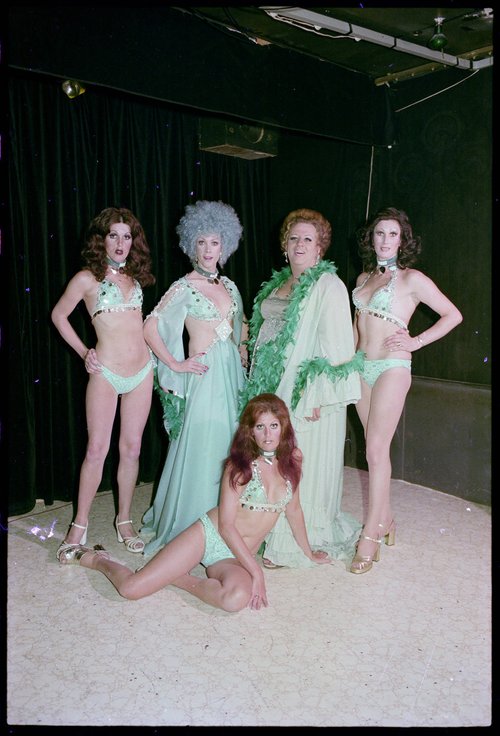
Auckland Libraries Heritage Collections 1269-19750215-14. Rykenberg Photography
Floorshow at Mojo's Nitespot on the corner of Queen and Wakefield Streets in central Auckland. Tiny Tina right of centre. Niccole Duval left of centre.
Mojo’s Nitespot was a performance venue at 348 Queen Street in Auckland. It was home to one of Aotearoa New Zealand’s most prominent drag shows in the 1970s.
The below item is a 1971 television report on Auckland nightlife, specifically interviewing transvestites and transexuals. A group of performers at Mojo’s discuss their identities and the issues they face being born male and living as women. Whilst parts of the interviews are open and frank, it is worth considering that the girls might be withholding information to protect their own safety. None of the interviewees mention homosexuality as it was illegal at the time. They would have been cognisant of the risks involved in presenting their identities unfiltered.
Mojo’s Nitespot is also featured in this Spectrum radio documentary, made two years later. It’s a Hard Day’s Night investigates Auckland’s nightlife scene. It includes some interviews with visitors of the nightclub, and discussion from performer Destiny-Jay who talks about her life and identity as a self-described transsexual.
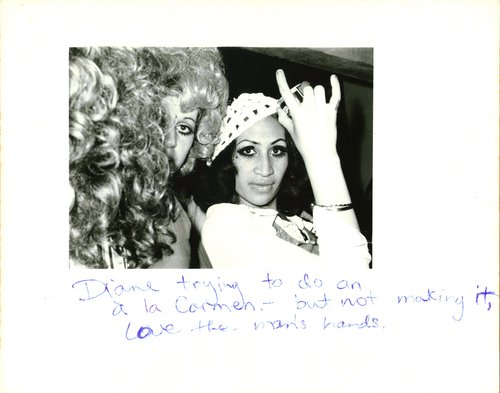
Tina and Diane at the Gay Liberation Dance Party, Auckland, June 1974
By Fiona Clark.
Fiona Clark is a visual activist photographer. Her work captures LGBTQIA+ people in New Zealand, spanning from Mojo’s Nitespot to the lesbian community of Taranaki and the KG Club. In the mid-1970s Fiona presented two images of transvestites in an exhibition called The Active Eye. This caused great controversy at the time, leading to the gallery being forced to close. Artwork from The Active Eye can be viewed on Fiona’s website: The Active Eye – Fiona Clark
The below episode of Kiwifruit features an interview with Fiona about this controversy. When talking about the backlash she notes that “They’re still threatened by the idea of gender, and that’s the bottom line.”
Carmen Rupe was a performer, activist and brothel keeper based in Wellington with a local celebrity status. In this interview with Carmen, held in her nightclub and broadcast in 1975, she discusses Members of Parliament who visit her nightclub and may be homosexual.
The television interview would go on to cause scandal, as Parliament’s Privilege Committee considered these comments to be a breach of parliamentary privilege. Carmen went on to formally apologise, however she did make the most of the media attention.
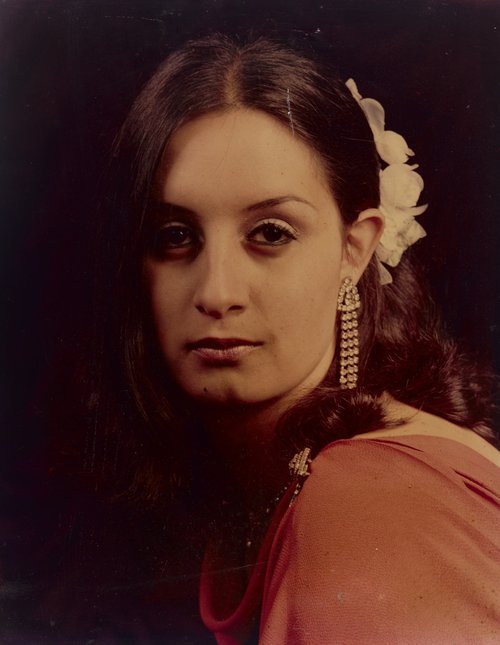
Georgina Beyer, 1978, New Zealand, maker unknown
Gift in memory of Georgina Beyer, 2024. © The copyright holder. Te Papa (O.051895).
Georgina Beyer is best known for being the world’s first openly transgender mayor and MP. She was an activist, a champion for LGBTQI+ communities, and campaigned for prostitution law reform and civil unions.
Prior to her political career, Georgina had many professions, including as a sex worker, actor and drag performer. In the below radio interview, Georgina talks through her childhood, her career, and her life as a transgender woman in the 1970s.