50th anniversary of the Māori Land March – Q&A with Irenee Cooper
11 Sep 2025
The granddaughter of Dame Whina Cooper reflects on the hīkoi.
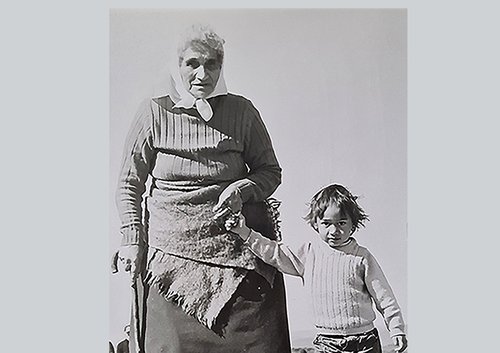
Hero image: Dame Whina Cooper and granddaughter Irenee Cooper, Te Hāpua, 1975. Courtesy Irenee Cooper.
In 1975, Dame Whina Cooper led a hīkoi from Te Hāpua in Northland to Parliament in Wellington. Known as the Māori Land March, the hīkoi was a watershed event in the history of Māori protesting the ongoing loss of their whenua.
A young child at the time, Whina Cooper’s granddaughter Irenee took part in the hīkoi. In what became an iconic image, the kuia and the mokopuna were pictured holding hands at the head of the march. Now, 50 years on, Irenee reflects on the historic event and its lasting legacy.
You were three years old when you went on the hīkoi with your Grandmother, Dame Whina Cooper. What moment do you remember most?
I was so young, but the memory has lived with me all my life, holding her hand, walking alongside her, not really understanding the politics but feeling the weight of her presence. I remember the crowds, the voices singing, the tired feet, and the way people looked at my kuia with such aroha and respect. Even as a child I could sense something bigger than us was happening.
From 1975 to today, how has the hīkoi influenced your whānau?
It gave us a map for how to live, to stand when it’s hard, to walk when you’re tired, to carry your whakapapa forward. Our whānau still talk about the hīkoi not as history, but as a responsibility. It shaped us, reminding us that our voices matter, and that silence is not an option when the whenua is at stake.
What impact did the hīkoi have on Māori-Pākehā relations and Aotearoa as a nation?
It cracked something open. For many New Zealanders it was the first time they really saw Māori grief, anger, and love for the land expressed so openly. It unsettled people, but it also made them listen. It showed this country that Māori were not going to fade quietly, that we were prepared to walk the length of the nation for justice.
What would you say to New Zealanders today who are continuing the fight for Māori land rights and sovereignty?
Don’t give up. You walk in the footsteps of giants. The path has already been carved by those who marched before you, now it’s your turn to keep the fire alive. Kia kaha, kia māia, kia manawanui.
Is there anything about the hīkoi you’d like to share that most people might not know?
People saw the speeches and the arrival at Parliament, but not the small, tender moments along the way. I remember the hospitality at marae, the way strangers became whānau overnight, and how children like me were cared for by everyone. The hīkoi wasn’t just protest, it was whanaungatanga in motion.
50 years on from the land march, what is your vision for the next 50 years?
That Māori land is not just protected but flourishes. That te reo Māori and tikanga are lived daily in every part of Aotearoa. And that my mokopuna can walk tall in both worlds, never doubting who they are or where they belong.
What is your fondest memory of your Grandmother?
Her laugh. People remember her fierce speeches, but she also had this cheeky, wicked humour. She loved to tease, and she loved her mokopuna fiercely. I remember her warmth more than anything.
Is there anything else you would like to share?
That the hīkoi wasn’t the end, it was a beginning. Its spirit still walks with us. And we, her mokopuna, carry that spirit wherever we go.
E kore e ea i te kupu noa ō mātou whakamānawa nui atu. E mihi nui ana ki a koe Irenee mōu i whakapuaki mai ēnei whakaaro nui mō tō kuia, hei taonga kōrero mā te ao katoa. Nō mātou te whiwhi, e mihi ana.
We thank Irenee for her insightful and touching words.
Learn more about the hīkoi and view related taonga from the collection in our new blog Te Ihi, Te Mana, Te Tapu, Maranga Rā! – 50 Years of the Māori Land March.