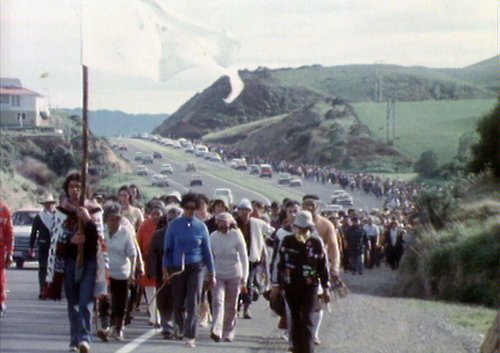
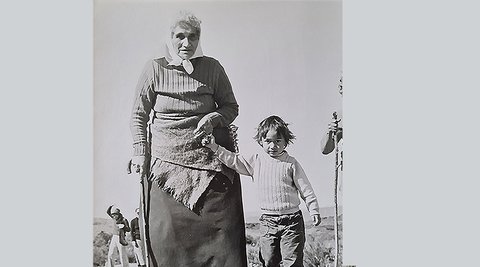
Hero image: Marchers walking along State Highway 1 – The Johnsonville-Porirua motorway towards Wellington, 1975. Screengrab from News; Archive News – 1975 Land March.
On 14 September 1975, a hīkoi led by Dame Whina Cooper set out from Te Hāpua in Northland to Parliament in Wellington, with the primary aim to protest the continuing, systemic loss of Māori land. They marched under the catch cry: “Not One More Acre!"
About 5000 marchers arrived at Parliament on 13 October 1975 and presented a petition signed by 60,000 people to then Prime Minister, Bill Rowling.
The Māori Land March marked a pivotal moment in the struggle against Māori land loss and the broader movement for Māori rights.
To mark the 50th anniversary of the Land March, we are privileged to share this collection of taonga which speak to the significance of the protest and its enduring legacy.
The Land
The colonisation of New Zealand involved extensive land loss from Māori to European ownership. This occurred through various mechanisms including confiscation following the New Zealand Wars, the Native Land Court's individualisation of communal titles, Crown purchasing policies and public works takings.
The period leading up to 1975 saw increasing Māori political consciousness, and concern about the Treaty, Māori language and continuing land loss.
By World War II, Māori retained little of their original land holdings, forcing many to move to larger towns and cities to find work.
Here is Dame Whina Cooper explaining concerns shared amongst Māori in a radio interview weeks before the march. She explains what land means to the Māori – it being integral to their identity and culture.
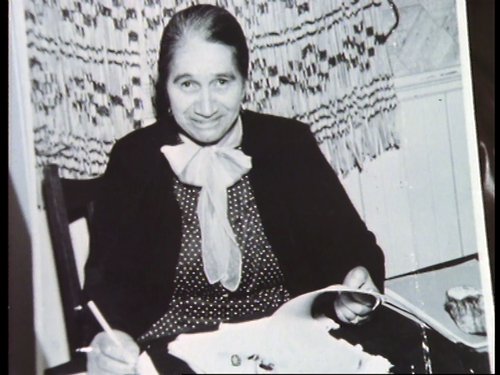
Whina Cooper granted the CBE award from The Crown, recognising her lifelong dedication to the Māori people and their rights, 1974. Screengrab from Encounter - This Land Is Ours, Collection ref. TZP2219.
A place of belonging
Land is tūrangawaewae – a place to stand/belong. In this taonga we learn more about the impacts of severing Māori ties to the land, and the displacement this has caused among Māori communities. In such circumstances, many Māori were calling for no more Māori land to be lost.
Despite decades of petitions, delegations, and formal representations to government, Māori communities had seen little meaningful action in relation to Māori land grievances and loss. Ultimately, talk of a ’hīkoi’ or march was spreading and interest in favour of the idea grew stronger, not only among Māori but non-Māori as well. Dame Whina and Te Rōpū Matakite o Aotearoa would spend at least six months planning for the 1000 km long march to parliament.
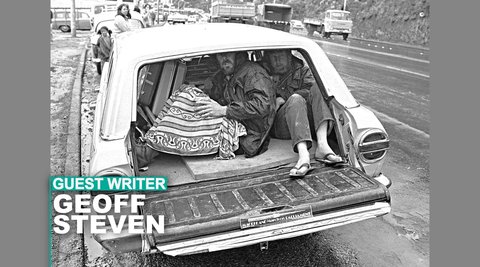
A description by Geoff Steven, Director of Te Matakite o Aotearoa – The Māori Land March.
“I met with Whina and some of the march organisers and, at a number of meetings, explained my aims and filmmaking philosophy. It was basically to capture what happens when it happens and attempt to portray the spirit and atmosphere of the undertaking and by documenting that, explain its underlying reasoning and political message.
“Eventually, I was given permission for me and my crew (as yet to be found) to travel with the marchers as part of the core group.”
Collection Reference: F1502. Year: 1975. Credit: Geoff Steven, Whina Cooper, Eva Rickard, Joe Hawke.
More scenes from the march
For many who marched, there were personal stories of land loss within their whānau. These were lived experiences of dispossession that had profound consequences for Māori.
In this taonga, we revert to the beginning stages of the hīkoi to hear stories from marchers about land loss and grievances.
“We have come too far to not go further. We have done too much to not do more.”
– Tā Hēmi Henare.
Although brief in duration, this footage captures the determination and spiritual force that drove this historic protest.
While the purpose of the march was to stand up against the government and their policies, weather conditions during the march became a battle of their own.
The famous words of Sir Hēmi Henare mentioned above fit well to describe and introduce this taonga.
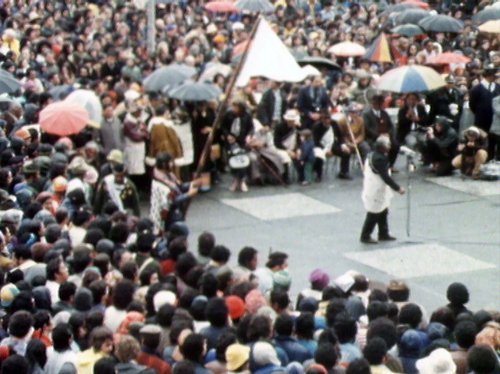
This radio programme presented by Whai Ngata covers the events that took place at the steps of parliament when the marchers arrived and introduces those who spoke on the day.
We hear speeches by members of parliament, as well as the voice of Dame Whina Cooper resounding through the heart of Wellington as she presents the memorial of right to the prime minister and the government.
Kaumātua stands to address the multitude at Parliament steps on behalf of Te Rōpū Matakite o Aotearoa. Screengrab from News; Archives News – 1975 Land March. Collection ref. TZP26319.
The Māori Embassy
While most had returned home, a determined group had remained, demanding firm assurances from the government: that no more Māori land was to be taken from Māori and that this commitment would be upheld through clear and binding policy. They erected their tent embassy, occupying Parliamentary grounds.
A poem by Hone Tuwhare – Papa-Tu-A-Nuku (Earth Mother)
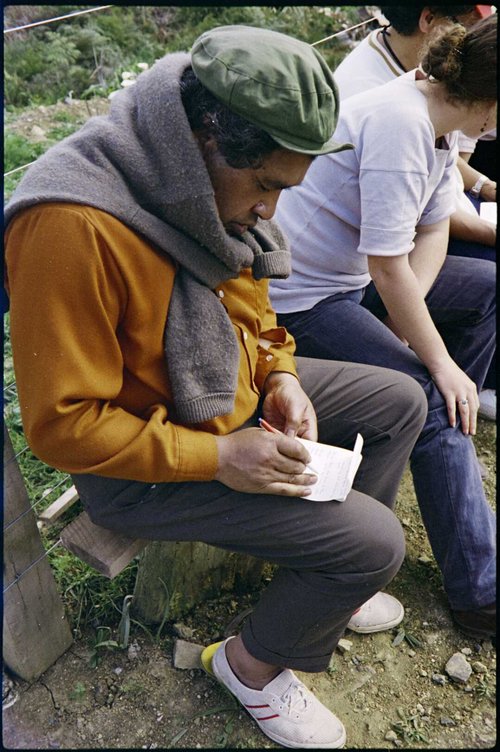
This poem was inspired and written during the hīkoi by Māori poet Hone Tuwhare of Ngāpuhi.
Reference: 44470. Year: 1975. Credit: Hone Tuwhare, RNZ. Special Thanks: Robert Tuwhare of the Hone Tuwhare Charitable Trust.
We are stroking, caressing the spine of the land.
We are massaging the ricked back of the land.
With our sore but ever-loving feet; hell, she loves it!
Squirming, the land wriggles in delight.
We love her.
Poet Hone Tuwhare writing in his notepad during a stop on the Māori Land March. Heinegg, Christian F, 1940. Ref: 35mm-87503-3. Alexander Turnbull Library.