With the Girls Overseas: Recordings of New Zealand nurses 1940—1946
21 Jul 2025
During World War II, Broadcasting Units made some extraordinary recordings of New Zealand nurses. A guest post by sound history researcher Sarah Johnston.
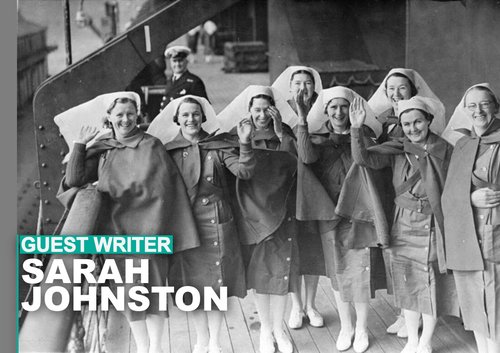
Hero image: Unidentified nurses of the 3rd Echelon, New Zealand Army Nursing Service, departing from Wellington during World War 2. Ship unidentified. Photograph taken by Charles P S Boyer, 28 August, 1940. Ref: DA-07102-F. Alexander Turnbull Library
Since early 2021 I have been listening to sound recordings made by New Zealand’s Broadcasting Units, which travelled overseas with our forces during World War II. A particular focus has been researching the thousands of messages home they recorded, which were sent back to New Zealand on disc to be compiled into a weekly radio programme called With the Boys Overseas.
By my rough estimate, about 90 percent of the recordings that the New Zealand Broadcasting Units made were of service men, but there are some significant recordings of New Zealand women. Mostly the female voices I hear are those of nurses, and on Anzac Day this year I presented a few of them in a programme for Ashburton Museum which I called With the Girls Overseas.
I am only partway through listening to all the surviving sound material recorded by the Broadcasting Units. The 1,600-odd discs are currently working their way through the Utaina project which is digitising Aotearoa New Zealand’s Crown-owned audiovisual collections, such as the RNZ Sound Archives where the Broadcasting Unit recordings are held. Eventually they will emerge fully digitised and I will get back to ‘listening to the war’. In the meantime, for the past few months I have turned my attention to recordings made by another New Zealand Broadcasting Unit immediately after the war. This time, it is the team which travelled to Japan to make recordings of New Zealanders serving in the British Commonwealth Occupation Force, or J Force, between 1946 and 1948. This smaller collection of discs was digitised some years ago so is accessible to me courtesy of Ngā Taonga Sound & Vision.
As I have done with the wartime discs, I am verifying the identities of the speakers in the Japan recordings, using the resources of Auckland War Memorial Museum’s Online Cenotaph database and enhancing the existing descriptions of the recordings’ contents for the Ngā Taonga catalogue.
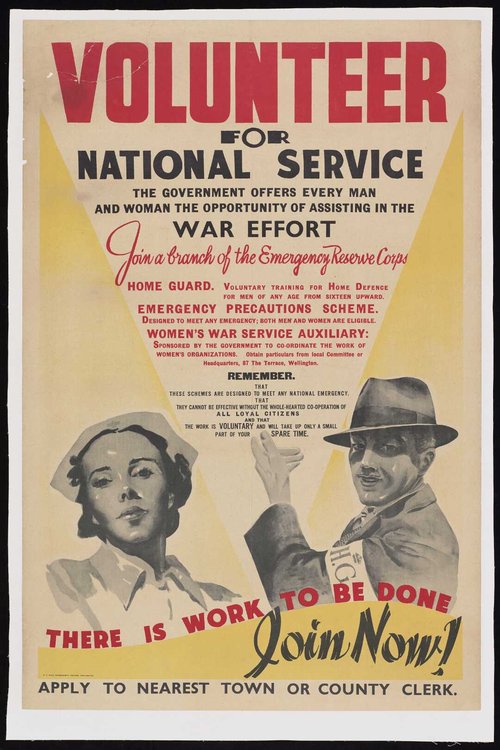
New Zealand: Volunteer for National Service
Poster by E.V. Paul, Government Printer, Wellington [1940]. Ref: Eph-D-WAR-WII-1940-03. Alexander Turnbull Library.
Christmas Day 1940
Between 1939 and 1948, 680 nurses served in the New Zealand Army Nursing Service in various theatres of war, while over 500 served as members of the New Zealand Women's Army Auxiliary Corps (or WAACS) in a variety of roles, including nursing.
The first New Zealand Mobile Broadcasting Unit sailed from Wellington in August 1940 and reached Egypt in October. Almost immediately the broadcasters had to start recording material for a programme to be broadcast in New Zealand on Christmas Day, because of the long travel time for the discs. They recorded messages from a man from each of the armed services – Army, Royal Air Force and Royal Navy – and also a New Zealand nurse. Unfortunately, these speakers were not named, as they were intended to be representatives of all the Kiwis serving in Egypt that Christmas.
The unnamed – and, as yet, unidentified Army nurse – can be heard in this excerpt from the Christmas Day 1940 radio programme. She gives a brief summary of life in Egypt for the New Zealand nurses and reassures women listeners that the nurses will ensure any patients in their care will receive a present or two on Christmas morning.
Principal Matron Eva Constance Mackay, c. 1944. Photograph by George Bull.
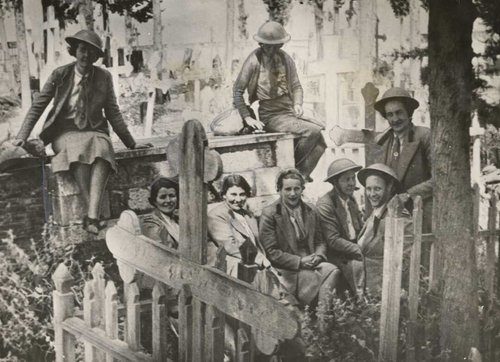
A few months later, in May 1941, another New Zealand nurse made a historically significant recording for the Broadcasting Unit in the Egyptian port of Alexandria. Matron Eva Mackay had just arrived there after leading a party of New Zealand Army nurses to safely evacuate from Greece and then Crete, when that military campaign turned to disaster for Britain and its allies. In this part of her recording, she recounts how her nurses were forced to take cover in a cemetery while German aircraft attacked from above, and how they continued their escape by army truck and any ocean-going vessel available, to get away from the advancing enemy forces.
Her recording was written up in the New Zealand Listener and published in June that year. Thanks to the recent digitisation of The Listener by the Papers Past website, you can also now read the article online.
Despite her calm retelling of her story for radio, Eva Mackay revealed more of the trauma of the events in The New Zealand Journal of Nursing:
“Never will I forget my few weeks in Greece. The last part will be like a nightmare for some time to come and the relief at stepping ashore in the Middle East was almost too much for me” she wrote. (New Zealand Journal of Nursing, 15 July 1941).
New Zealand nurses in a cemetery, during the withdrawal from Greece
Unknown photographer. Published in the Evening Post 23 July 1941. Ref: PAColl-7796-87. Alexander Turnbull Library.
The nurses of No. 4 New Zealand General Hospital
Eva Mackay had an important tale to tell. She was also a senior nurse, who was decorated and eventually became head of the New Zealand Army Nursing Service. However, the majority of voices of nurses I’ve heard so far in the Broadcasting Unit collections are telling much more intimate stories, in the forms of short messages to loved ones at home.
The personal messages from nurses are very similar in content to the thousands of other messages home recorded by New Zealand service men. Wartime censorship restrictions prevented the speakers, male and female, from giving details about where they were or what action they had been involved in, and the content of the messages now sounds fairly generic to our modern ears. However, they were incredibly popular with radio listeners back home. Hearing the voice of someone you knew, or the friend of a friend, speaking from the other side of the world would have been a great novelty in the 1940s. At that time letters or telegrams were the only other means of long-distance communication, and hearing the actual voice of a loved one was deeply personal. You can hear a collection of typical greetings from nurses who were caring for wounded in No. 4 New Zealand General Hospital in Helwan, Egypt in 1941, here.
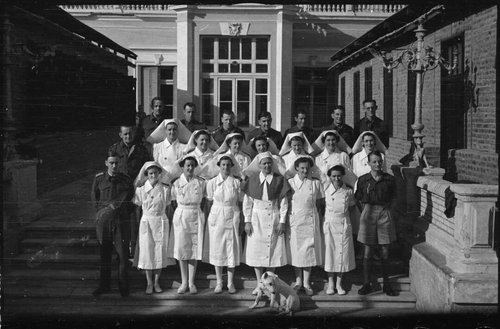
Christchurch medical personnel serving at Helwan Hospital and at Maadi Camp
Photograph by George Bull. Ref: DA-04780-F. Alexander Turnbull Library.
With the Kiwis in Japan
As explained at the start of this blog, I am currently listening to recordings of some of the 12,000 New Zealanders who served in Japan between 1946 and 1948 as part of J Force. This collection also features voices of some of ‘the girls overseas’. The speakers in the J Force recordings were no longer at war and the New Zealand Broadcasting Unit that operated there was not as restricted by censorship in the material it recorded. Its work was compiled back in Wellington to form a weekly radio programme called With the Kiwis in Japan.
Besides the messages home, many items I have listened to so far seem to be an attempt to explain Japan and the Japanese people to a New Zealand radio audience. This was a country most New Zealanders knew very little about, except that only a year earlier, it had been a much-feared enemy. In this recording, we hear the views of a South Canterbury nurse, Sergeant Joyce Ford. She had seen active service in the Middle East and the Pacific during the war, before serving at No. 6 New Zealand Hospital in Kiwa, Yamaguchi in southern Japan, which is where the New Zealand component of J Force was largely based.
In her radio talk, she attempts to describe the traditional position of women in Japan and how this is beginning to change with the Allied post-war occupation, which introduced female suffrage, along with other measures designed to demilitarise and democratise Japanese society.
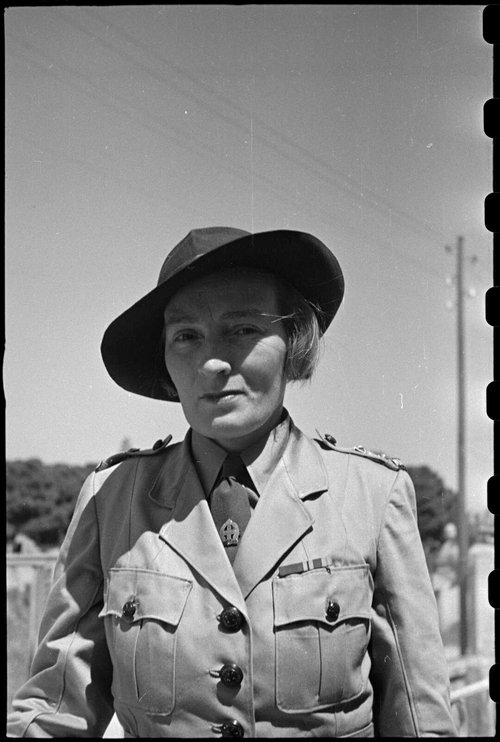
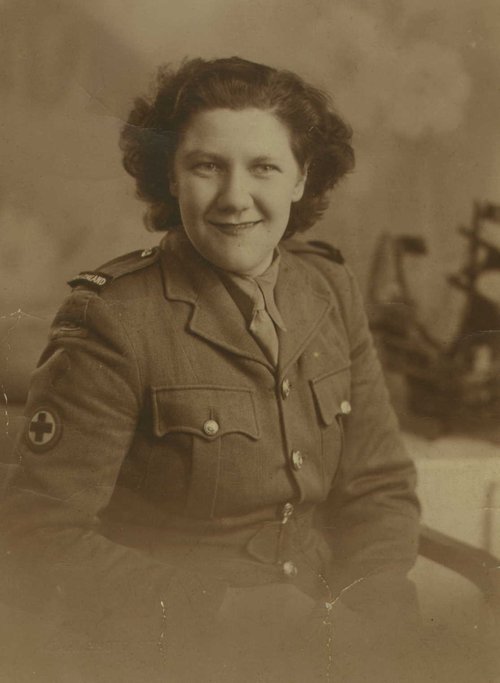
Joyce Evelyn Ford in uniform
Kindly provided by Joyce Bennett (2001). Online Cenotaph, Auckland War Memorial Museum (C120070).
The voices of New Zealand women like Joyce Ford speak to us from over 80 years ago, and form a small but important part of the New Zealand sound history of World War II. I’m looking forward to hearing more of them once the Utaina project’s digitisation is complete, and learning more of their lives and insights into this formative period in the history of Aotearoa.